Spot
Intro.
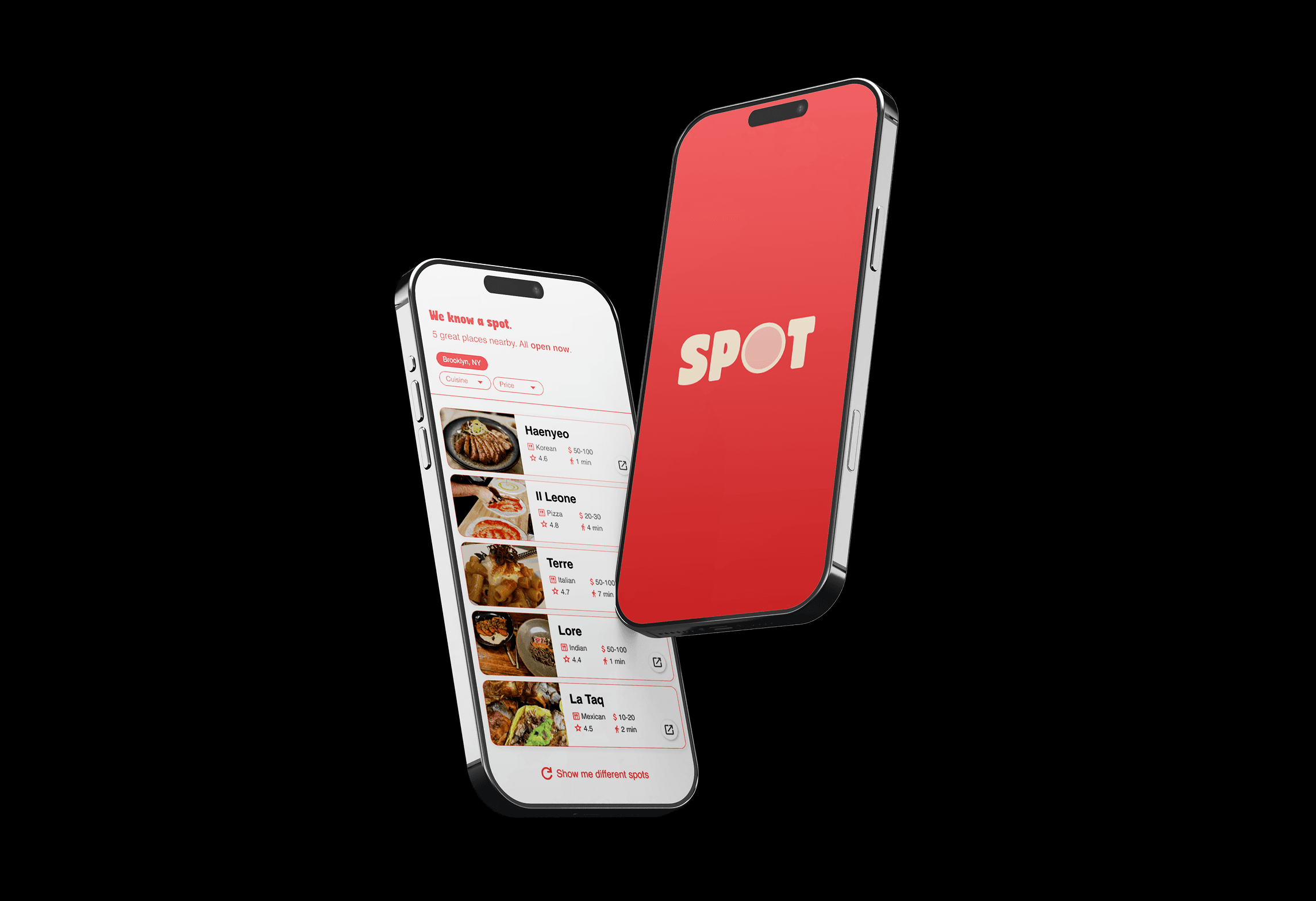
I’m the founder of Spot, a real-time restaurant discovery app I created to simplify choosing where to eat. I designed the experience to surface a small set of highly relevant restaurants based on proximity, availability, and quality, focusing on clarity, speed, and trust. I’m now independently developing the product with AI-assisted tools, aiming to launch on the App Store this year.
.
The Mission.
Help travelers choose restaurants with confidence
The mission is to remove choice friction and help travelers make confident dining decisions quickly. Spot delivers a small set of reliable, high-quality restaurants filtered for relevance, availability, and trust, letting users spend less time researching and more time enjoying their trip.

.
The Problem.
Finding somewhere to go on the fly shouldn't be hard
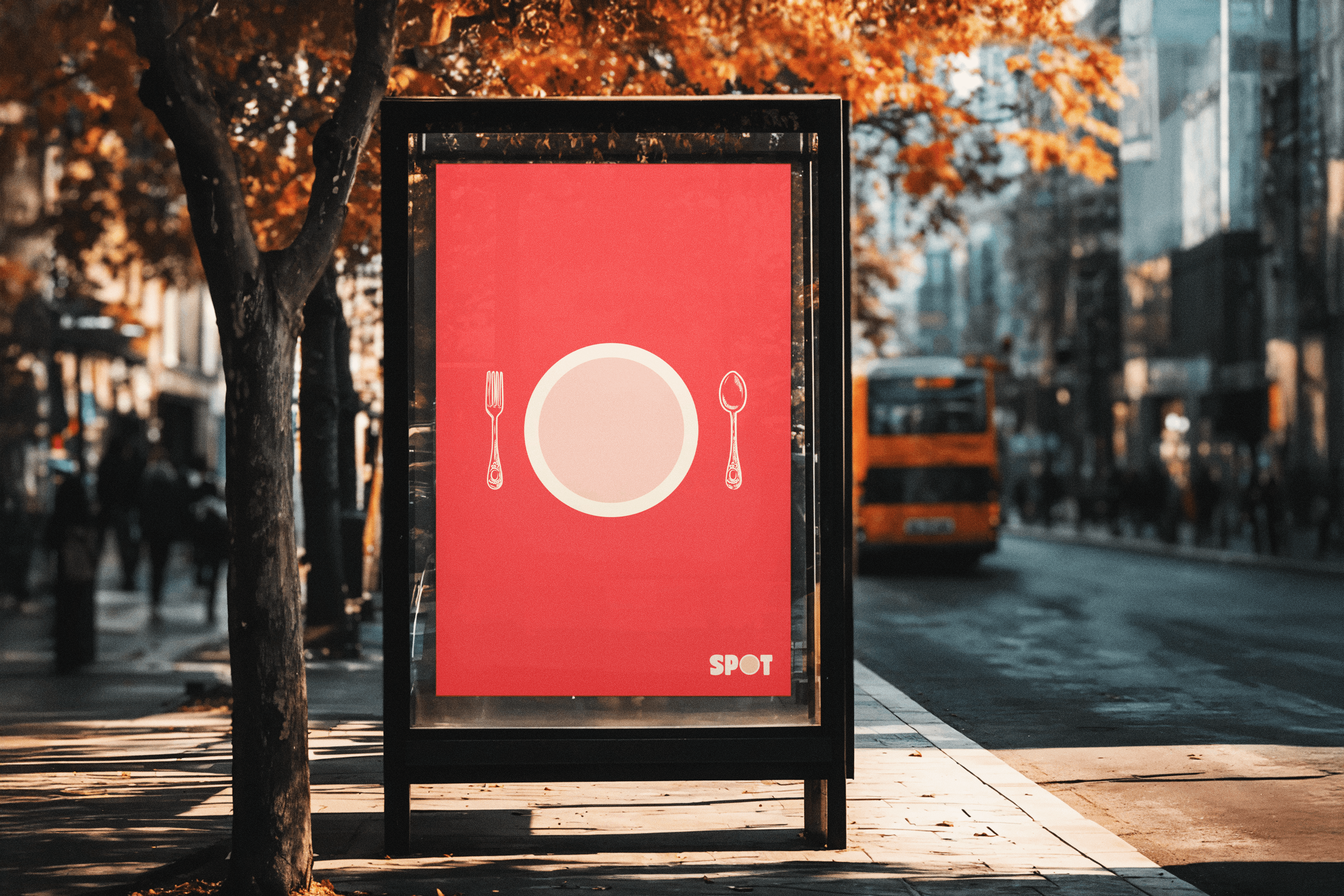
Finding a place to eat while traveling is frustrating and time-consuming. Endless lists, dense reviews, and conflicting opinions leave travelers stuck researching or settling for convenience over quality.
.
The Solution.
Fewer options.
Better decisions.
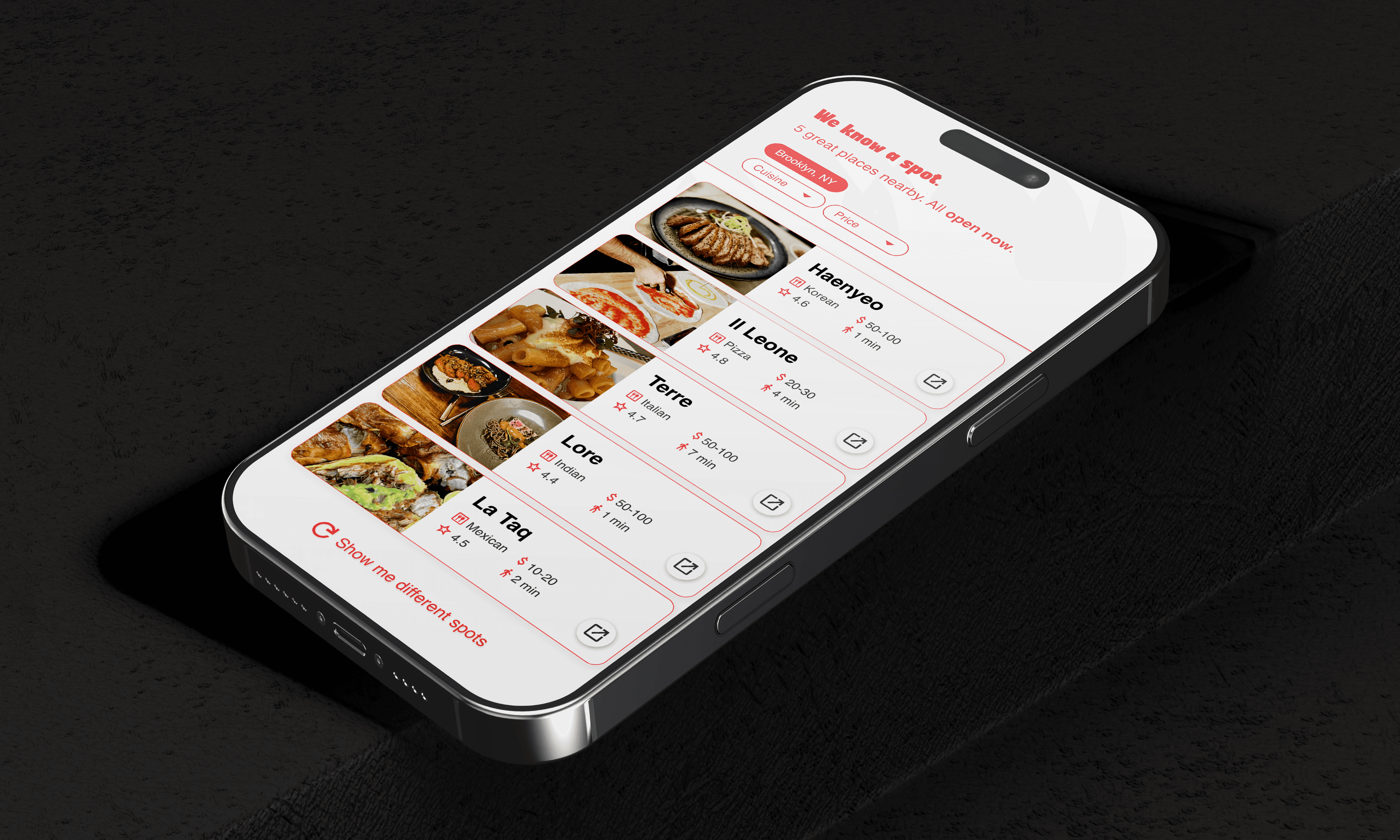
Open Spot → See 5 curated options → Filter by cuisine or refresh → Tap to get directions.
That’s it. Fast, simple, and reliable.
.
Target Moment.
Hungry, unfamiliar, and on a schedule.
Spot helps travelers who are hungry, short on time, and in unfamiliar areas quickly find a reliable place to eat without sifting through reviews. It’s built for moments when speed and confidence matter more than exploration.

.
Research/Competitive Tear Down.
Assessing the field
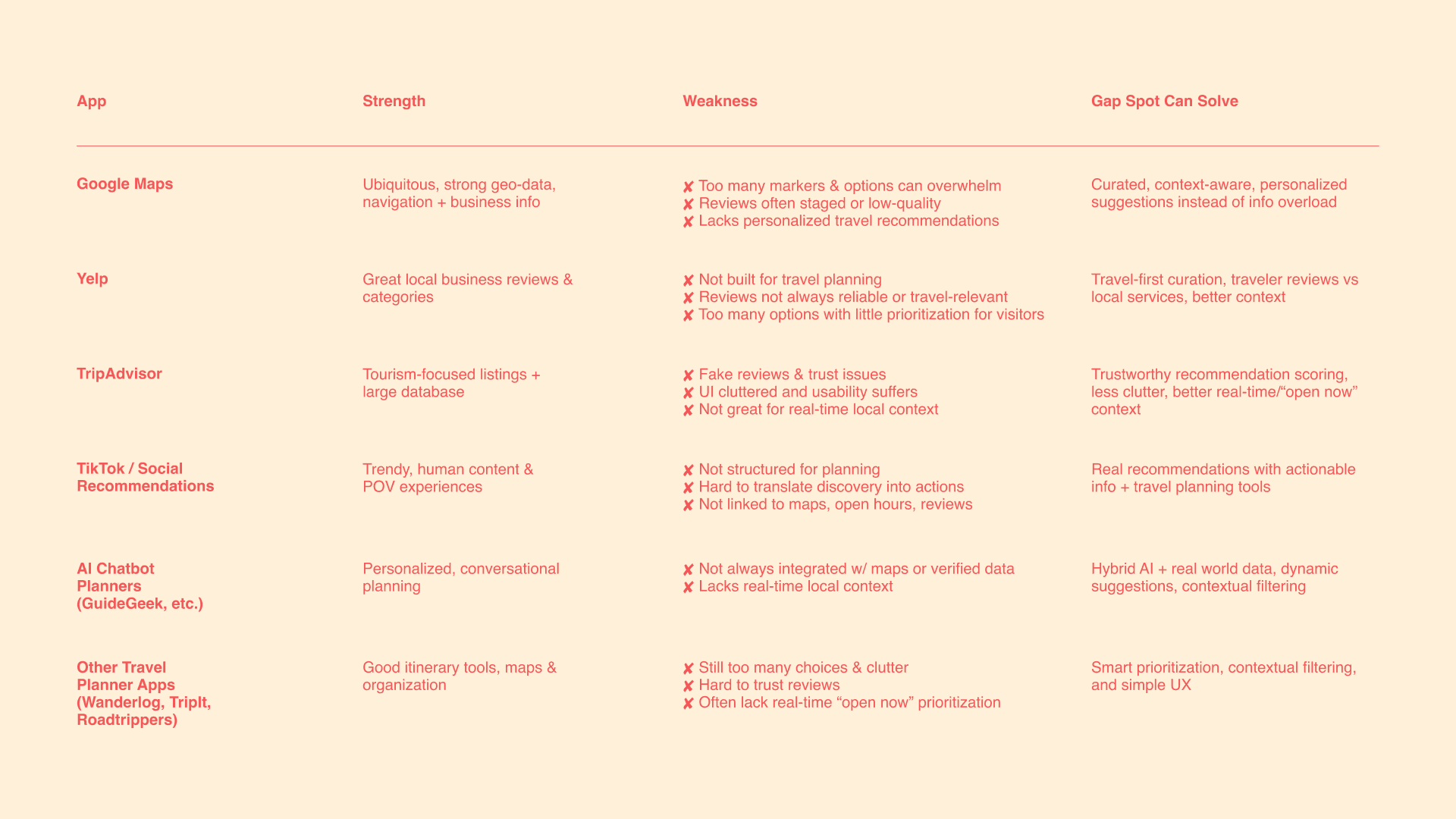
I conducted a competitive teardown to evaluate how existing platforms handle restaurant discovery in time sensitive moments. Across tools like Google Maps and Yelp, I found a consistent reliance on overwhelming choice and review heavy experiences optimized for exploration, not decision making. This revealed a clear opportunity to design for speed, trust, and reduced cognitive load.
.
Key Opportunities.
Filling a gap in the market

.
User Research.
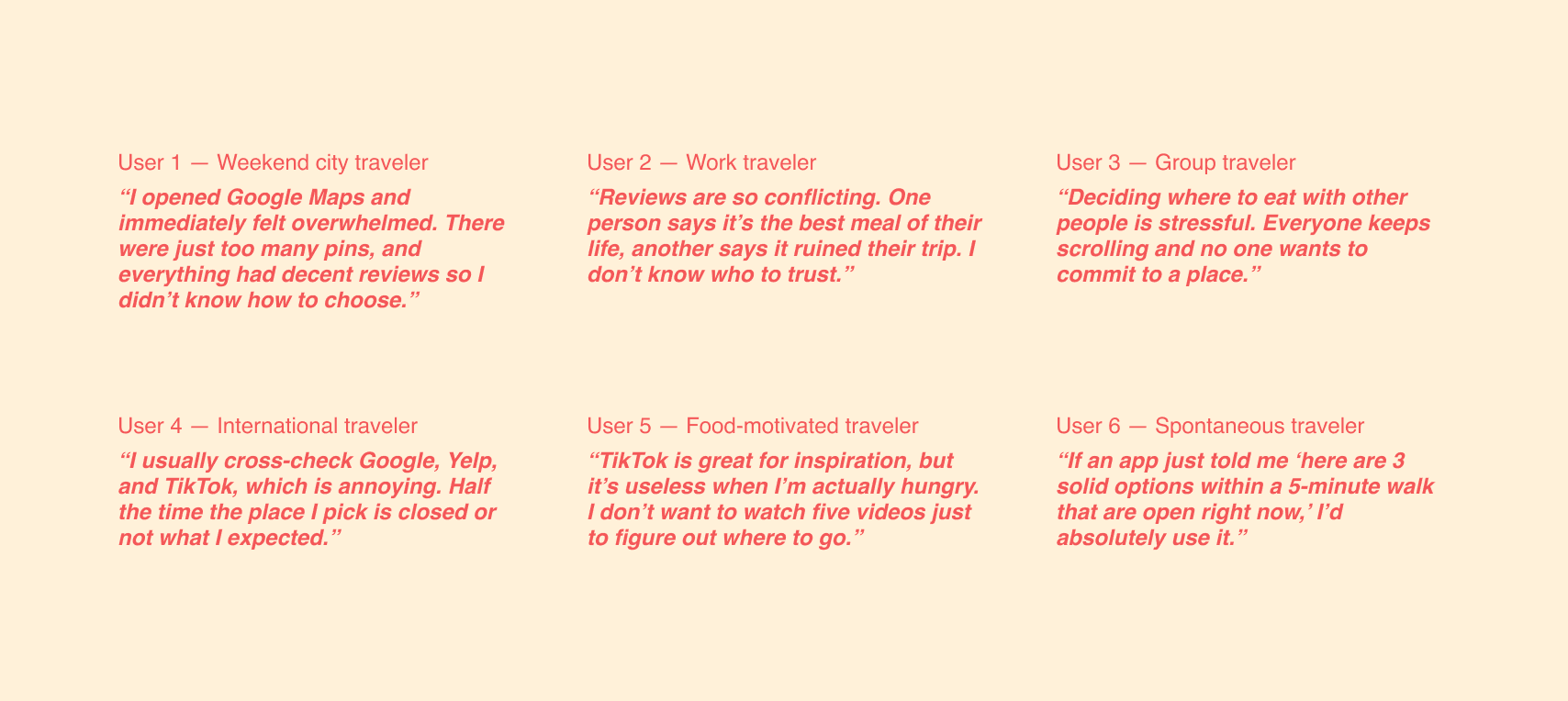
Method: Quick, informal interviews with 6 frequent travelers
Key Questions Asked:
“Last time you were hungry while traveling, how did you find a place to eat?”
“What frustrated you about that process?”
“Would you use an app that gave you 3–5 curated options nearby?”
.
Wireframing.
Visualizing the layout
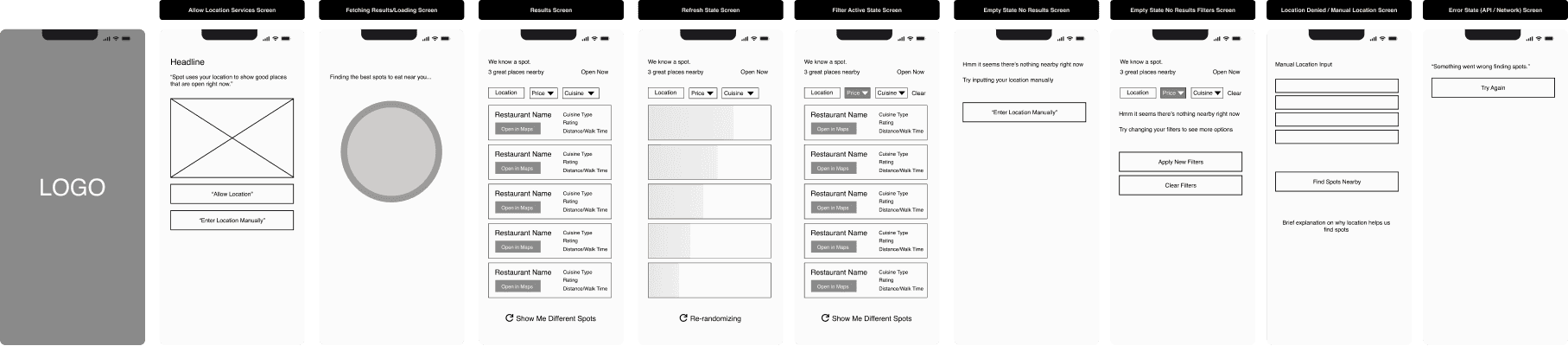
I used wireframing to explore and refine the core experience, simplifying decision-making and reducing friction. Rapid iterations helped surface a small set of high-quality options with clarity, hierarchy, and ease of use before high-fidelity design.
.
KPIs.
What I'm focusing on as I build
.
Final Designs.
Work in Progress…
I’m currently building the app, translating final designs into a working product using AI-assisted development tools, focusing on speed, clarity, and usability.
.
.
Stay Tuned!
Check back to see the finished product adn download it in the app store to user yourself!